The $60 Filter That Eats Your Skin Tones: Five Budget Variable NDs in Daylight
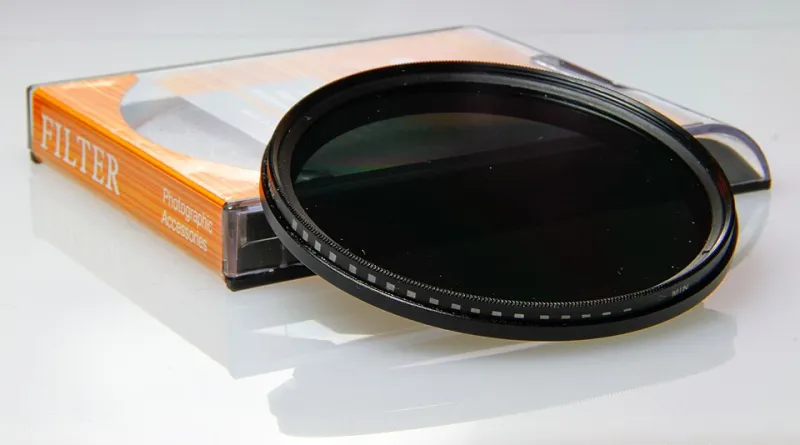
Photo: pulaw from Knoxville, TN, CC BY 2.0, via Wikimedia Commons
A variable ND filter is one of those purchases that feels like a shortcut. One ring, a twist, and you can hold a wide aperture in full sun without swapping glass. That is the pitch. The reality, as anyone who has stared at a slightly green face in Resolve can tell you, is messier. In November 2026, we grabbed five variable NDs under $100 and ran them against a fixed ND baseline on an outdoor interview setup in Los Angeles. The goal was not to crown a winner. It was to see where the cheap convenience ends and the color correction begins.
The test setup
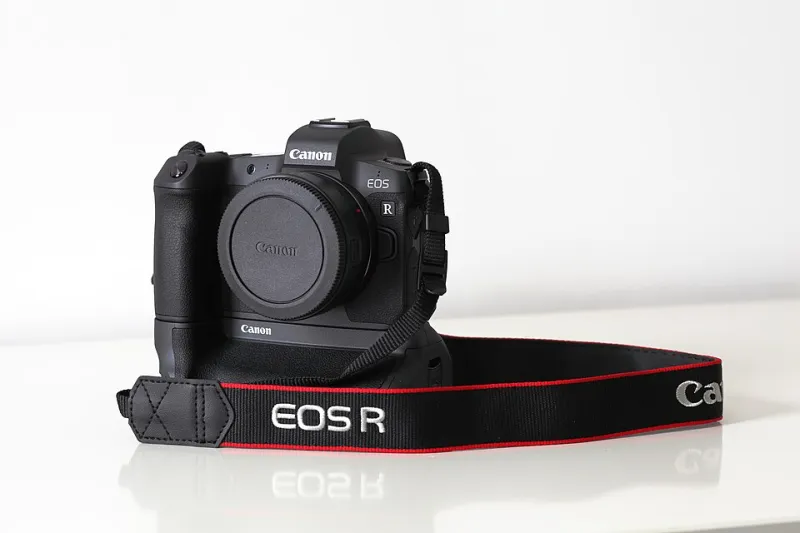
We shot on a Super 35 mirrorless body with a 24-70mm f/2.8 zoom, locked to a tripod, with a single subject in open shade and a second setup in direct late-afternoon sun. White balance was set manually to 5600K, and we framed a gray card and a color checker in the first frame of every take. The baseline was a pair of fixed ND filters, one 3-stop and one 6-stop, from a known mid-range brand. The challengers were five variable NDs: one $29 special, two around $49, and two at $79. We will call them Filters A through E. No brand logos, no affiliate links, just results.
We measured color shift with a vectorscope and by pulling the same skin-tone patch into Resolve and comparing RGB parades. We checked IR pollution by including a black synthetic shirt and a black fleece in frame, since cheap ND glass often turns those into brown or magenta. Flare was tested with the sun just outside the frame at three angles. Vignetting was checked at 24mm and 16mm equivalent on a wider lens. We also noted mechanical behavior: how smooth the ring felt, whether the filter crossed into an X pattern at high density, and whether it introduced a hard edge when stacked with a step-up ring.
What the cheap glass did to skin
The first surprise was not that the budget filters shifted color. It was how differently they shifted it. Filter A, the $29 option, went green in the midtones as soon as we passed about four stops of density. On a fair-skinned subject, that read as a mild nausea filter. On deeper skin tones, it flattened contrast and pushed the highlights toward yellow. Filter C, one of the $49 units, leaned magenta at max density, which made ruddy cheeks look sunburned even in shade. The two $79 filters were better, but neither was neutral. One drifted slightly warm, the other slightly cool, and both needed a custom white balance or a color chart pass to get skin back to a believable place.
The fixed ND baseline was not magic. It was just neutral. Skin looked like skin, the gray card stayed gray, and the vectorscope line sat where it should. That is the entire point of a fixed filter: it subtracts light without asking you to fix its personality later. A variable ND is two polarizers working against each other, and at high density that sandwich tends to introduce a color cast. Some manufacturers correct for it. Most sub-$100 models do not correct enough.
IR pollution and the black shirt problem
The black shirt test was the most useful. Under the fixed ND, black stayed black. Under three of the five variable filters, the shirt shifted toward brown or muddy purple, especially at six stops and beyond. That is IR pollution, and it does not stay confined to fabric. It can show up in dark hair, shadows, and the subtle contrast around a face. You can sometimes fix it with a hot mirror or an IR-cut filter, but now you are stacking glass, losing more light, and adding another place for flare to enter.
The two more expensive variable NDs handled IR better, but they were not immune. If your interview subject is wearing a black jacket and you are shooting in hard sun, a budget variable ND is a gamble. A fixed ND with decent coatings is the safer bet. This is also where the cost math starts to turn. A $60 filter that requires a $40 IR-cut filter and twenty minutes of color work is no longer a $60 filter.
Flare, vignetting, and the wide-angle tax
Flare was inconsistent across all five. The cheapest filter veiled the image whenever the sun crept near the frame, dropping contrast in a way that looked like a lens problem but was really a coating problem. The better variable NDs held up, but none matched the fixed baseline. If you shoot a lot of backlit exteriors or golden-hour interviews, that matters. Veiling flare is hard to remove in post without making skin look plastic.
Vignetting was the other gotcha. Variable NDs are thick. Stack one with a step-up ring on a wide lens and you may see hard corners at 16mm or even 24mm depending on the lens. The fixed filters were slimmer and cleaner at the edges. If you shoot wide establishing shots or gimbal work, budget for a larger filter size and step-up rings rather than cramming a small variable ND onto a wide lens.
When a cheap variable ND is good enough
There is a real use case for a sub-$100 variable ND. If you are shooting solo, grabbing b-roll, or posting to social where skin tones get compressed and scrolled past in two seconds, the convenience can outweigh the color shift. A $60 filter that lets you keep shooting instead of swapping ND strengths is not worthless. Just do not expect it to be invisible.
It is also more tolerable at lower density. Most of the ugly shifts showed up past four stops. If you are using a variable ND to shave two or three stops in open shade, the better budget models can be fine. Lock your white balance, shoot a gray card, and plan a small correction. The trouble starts when you crank it to maximum density and expect the camera to sort it out.
The step-up ring math
Here is the uncomfortable conclusion. A set of fixed NDs in one size plus a few step-up rings often costs less than a good variable ND, and it behaves better. You can find a 3-stop, 6-stop, and 10-stop set for around $120 to $150 if you shop carefully, and step-up rings are $10 to $20 each. That is not pocket change, but it is predictable. The variable ND saves you swap time. The fixed set saves you color time. For a sit-down interview where skin tones matter, I would take the fixed set every time.
If you absolutely need variable convenience, spend more than $100 and look for a model that explicitly claims IR cut and decent coatings. The $29 and $49 filters in this test were fine as emergency tools. They were not fine as the only ND in a paid interview kit. The $79 pair were closer, but still needed a correction pass. None of them beat a fixed baseline on neutrality.
The bottom line
A cheap variable ND is not a scam. It is a trade. You are trading color accuracy, flare resistance, and sometimes IR performance for speed. That trade can be worth it for run-and-gun, travel, and social work. It is rarely worth it for a hero interview where a client will stare at a face on a 27-inch monitor. If you are building a kit in 2026, start with a fixed ND in your most common lens size and a set of step-up rings. Add a variable ND later as a convenience tool, not as your foundation. Your colorist, or your future self at 11 p.m., will thank you.